
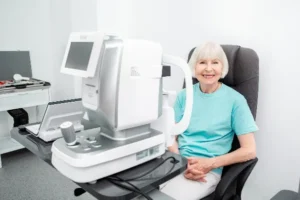
 Glaucoma is a group of eye diseases that damage the optic nerve, which is the “cable” that carries visual information from your eye to your brain. The most common forms can develop slowly, often without noticeable symptoms at first, until permanent vision loss has already happened. That’s why glaucoma is often called a silent thief of sight: it may not cause pain, and you might not realize anything is wrong until side vision is impacted. (2) The good news is that glaucoma management has improved significantly. While lost vision usually cannot be restored, early diagnosis and consistent treatment can slow down (and sometimes stabilize) the progression for many people. The main treatment approach is usually lowering intraocular pressure (IOP), or eye pressure, because reducing IOP is currently the most proven way to protect the optic nerve over time. (2) Below is an educational, evidence-based guide to understanding glaucoma, how it’s detected, how “target eye pressure” is set, and what modern treatment and monitoring can involve.
What Is Glaucoma
Glaucoma isn’t just one condition. It’s an umbrella term for diseases that share a common feature: progressive optic nerve damage, often associated with elevated IOP, but not always. Some people develop glaucoma even when IOP readings fall within what’s considered a “normal” range, and some people with higher-than-average IOP never develop glaucoma. In other words, IOP is important, but it’s not the whole story. (4)
Over time, optic nerve injury can lead to:
- Gradual loss of peripheral (side) vision
- Difficulty seeing in low light
- More advanced vision loss if untreated
Who Is Most at Risk
Anyone can develop glaucoma, but the risk increases with certain factors. Major public-health sources consistently highlight increased risk among:
- Adults over 60
- Black adults over 40
- People with a family history of glaucoma
- People with diabetes (1)
Risk can also be influenced by the type of glaucoma, eye anatomy, certain medications (for example, long-term steroid use), and previous eye injury or surgery (your eye doctor can help personalize your risk profile).
A quick note on prevalence
It’s worth noting that many Americans, millions even, are affected by glaucoma, with a significant number experiencing vision problems, though exact figures vary based on how it’s defined and studied. (8)
Types of Glaucoma You’ll Hear About Most Often
Primary Open-Angle Glaucoma (POAG)
This is the most common form in the U.S. It typically develops slowly, and many people have no early symptoms.
Angle-Closure Glaucoma
This can be acute (sudden) or chronic. Acute angle closure may cause severe symptoms and is considered an eye emergency.
Normal-Tension Glaucoma
Optic nerve damage occurs even though IOP readings may be in a typical range, another reason glaucoma evaluation goes beyond a single pressure measurement.
Secondary and Congenital Forms
Some cases result from other eye conditions, trauma, medications, or are present from birth.
Symptoms: When to Get Help Immediately
Many people with open-angle glaucoma feel fine early on. But urgent symptoms can signal acute angle-closure glaucoma and require immediate care:
- Suddenly, severe eye pain
- Red eye with blurry vision
- Halos around lights
- Nausea/vomiting with eye symptoms (1)
If you experience these, treat them as an emergency.
How Glaucoma Is Diagnosed: The Tests That Matter
A proper glaucoma evaluation is more than a quick pressure check. Common components include: (3)
1) Tonometry (IOP measurement)
Measures eye pressure. Helpful—but limited if used alone.
2) Checking the optic nerve (often after eye drops that make your pupils bigger)
This lets doctors directly examine the optic nerve and determine whether it’s damaged.
3) Checking your side vision (perimetry)
This checks your outer vision, which helps find any vision loss and see if it’s getting worse.
4) Eye surface thickness (pachymetry)
The thickness of your cornea can affect your eye pressure readings and how we interpret them.
5) Gonioscopy
This procedure examines the drainage angle to determine whether the glaucoma is open-angle or angle-closure.
6) OCT imaging (Optical Coherence Tomography)
OCT scans create detailed images of the eye’s nerve layers and the optic nerve, which help detect and monitor structural changes.
Why One Eye Pressure Check May Not Show the Full Picture
A single eye pressure check may not tell the whole story because pressure inside your eye fluctuates throughout the day and night. This means one reading at the doctor’s office might miss the highest or lowest pressure. Research shows that checking eye pressure only when the doctor’s office is open doesn’t always show all the changes. So, some eye doctors might ask for more tests or for you to check your eye pressure at home, especially if your eye disease is getting worse even when your office readings look okay. (7)
What Is “Target Eye Pressure” and Why Does It Matter?
Instead of aiming for a single “perfect” IOP number for everyone, many modern approaches use a personalized concept called target IOP (target intraocular pressure).
The European Glaucoma Society defines target IOP as an upper limit compatible with a slow enough rate of progression to maintain quality of life over a patient’s lifetime—and emphasizes that there is no single target that fits every patient. Target IOP should be reassessed over time, especially if progression is detected or circumstances change. (5)
What determines the desired eye pressure?
Typical things doctors think about are:
- How far along is the glaucoma (just starting, in the middle, or very bad)
- What was the eye pressure before any treatment
- How quickly is the condition getting worse
- How the optic nerve looks and how well someone can see
- How old the person is and how long they are expected to
- How well someone handles medicines and if they cause problems
- Other health issues with the eyes or body(5)
In advanced disease or faster progression, targets may be set lower, sometimes requiring stronger therapies or surgery to achieve them. (6)
Treatment Options: How Doctors Lower Eye Pressure
While treatment is individualized, most strategies focus on lowering IOP and reducing optic nerve stress.
1) Prescription eye drops
Drops are commonly used early in treatment. A key success factor is consistency—so treatment plans often prioritize a regimen that’s effective and realistic for daily life. (4)
2) Laser therapy (and why it’s becoming a first-line option for many patients)
Laser treatment—most commonly selective laser trabeculoplasty (SLT) for open-angle glaucoma—can lower eye pressure by improving the eye’s drainage function. Historically, many patients started with daily eye drops and later moved to lasers. But that treatment sequence is changing: growing evidence supports SLT as an effective early option for many patients, with potential advantages in long-term consistency compared with daily drops. (9)
3) Less Invasive Glaucoma Surgery (MIGS)
If eye pressure needs to be reduced more, or if eye drops and laser treatments aren’t working well enough, doctors might suggest surgery. The kind of surgery chosen will depend on how serious the glaucoma is and what type it is, with choices ranging from small, less invasive procedures to older, more common glaucoma operations. (4)
4) Standard glaucoma operations, such as trabeculectomy or tube shunts
These are typically chosen when very low pressure is required or when other treatments haven’t worked well enough. The main principle is that the amount of treatment given should match the patient’s risk, and the treatment plan must change as the illness progresses.
Monitoring Over Time: The Part People Underestimate
Taking care of glaucoma isn’t a one-time thing; you can’t just leave it alone. Even if the eye pressure seems fine, it’s important to keep monitoring, because glaucoma is about how easily the optic nerve can be damaged and how likely it is to get worse, not just a single pressure reading.
Monitoring might include:
- Checking eye pressure again (sometimes at different hours of the day)
- Regular scans of the eye (OCT)
- Regular vision tests to check side vision
- Looking again at the desired eye pressure and how hard the treatment is to follow
This is also where helping people stick to their treatment (by making eye-drop schedules easier, addressing side effects, and making medicine more affordable) can greatly improve results.
Practical Questions to Ask at Your Next Glaucoma Visit
If you want to be an informed partner in care, consider asking:
- What type of glaucoma do I have (or am I a suspect)?
- What is my target eye pressure, and why?
- How will we know if I’m progressing—fields, OCT, or both?
- Do my pressure readings vary enough to justify additional monitoring?
- What are the pros/cons of drops vs laser vs procedures for my situation?
- How often should I be rechecked given my risk profile?
When to Get Expert Glaucoma Help
You should see a glaucoma specialist if you have any of these situations:
- Your glaucoma is getting worse even with “normal” eye pressure.
- You have medium to severe glaucoma and need very low eye pressure.
- You are on many medications or have bad side effects.
- You have other eye problems, such as cataracts, that make treatment more difficult.
- Your eye pressure fluctuates a lot, and the doctor doesn’t catch the highs during visits.
A Local Option for Advanced Glaucoma Management
For advanced, personalized glaucoma care, Nova Eye Institute offers Specialized Glaucoma Care, including methods to check eye pressure, the best medication plans, and surgery if needed. You can learn more here: Specialized Glaucoma Care.
References
1) “About Glaucoma.” Centers for Disease Control and Prevention, 15 May 2024, https://www.cdc.gov/vision-health/about-eye-disorders/glaucoma.html. Accessed 5 Jan. 2026.
2) “Glaucoma.” MedlinePlus, National Library of Medicine, 13 Jan. 2025, https://medlineplus.gov/glaucoma.html. Accessed 5 Jan. 2026.
3) “Glaucoma Tests.” MedlinePlus Medical Test, National Library of Medicine, 24 Oct. 2023, https://medlineplus.gov/lab-tests/glaucoma-tests/. Accessed 5 Jan. 2026.
4) “Glaucoma.” National Eye Institute, 26 Nov. 2025, https://www.nei.nih.gov/eye-health-information/eye-conditions-and-diseases/glaucoma. Accessed 5 Jan. 2026.
5) “How Should We Define Target Intraocular Pressure?” European Glaucoma Society, 2 Dec. 2019, https://eugs.org/news/how-should-we-define-target-intraocular-pressure-2019-12-02-pearl. Accessed 5 Jan. 2026.
6) “When Choosing a Glaucoma Operation, Be Guided by the Target Intra-Ocular Pressure (IOP).” European Glaucoma Society, 30 Apr. 2022, https://eugs.org/news/when-choosing-a-glaucoma-operation-be-guided-by-the-target-intra-ocular-pressure-iop-2022-04-30-tip-of-the-month. Accessed 5 Jan. 2026.
7) Arora, Tarun, et al. “Diurnal versus Office-Hour Intraocular Pressure Fluctuation in Primary Adult Onset Glaucoma.” Journal of Optometry, vol. 8, no. 4, 2015, pp. 239–243. Journal of Optometry, https://www.journalofoptometry.org/en-diurnal-versus-office-hour-intraocular-pressure-articulo-S1888429614000405. Accessed 5 Jan. 2026. Journal of Optometry
8) “VEHSS Modeled Estimates: Prevalence of Glaucoma.” Centers for Disease Control and Prevention, 1 Oct. 2024, https://www.cdc.gov/vision-health-data/prevalence-estimates/prevalence-estimates-glaucoma.html. Accessed 5 Jan. 2026.
9) American Academy of Ophthalmology. “More Evidence to Support Shift in Standard Glaucoma Care.” American Academy of Ophthalmology Newsroom, 20 Oct. 2024, https://www.aao.org/newsroom/news-releases/detail/evidence-support-shift-in-standard-glaucoma-care. Accessed 5 Jan. 2026.